E-commerce Furniture Next.js
 TypeScript
 Tailwind
 Node.js
 Express
 MongoDB
 shadcn/ui
 JWT
JWT Cloudinary
Lorvic Furniture
Lorvic blends editorial storytelling with product discovery. I focused on typographic rhythm, fast-loading imagery, and a consistent component system to keep browsing sharp and conversion focused.
Main Stack
shadcn/uiJWTCloudinary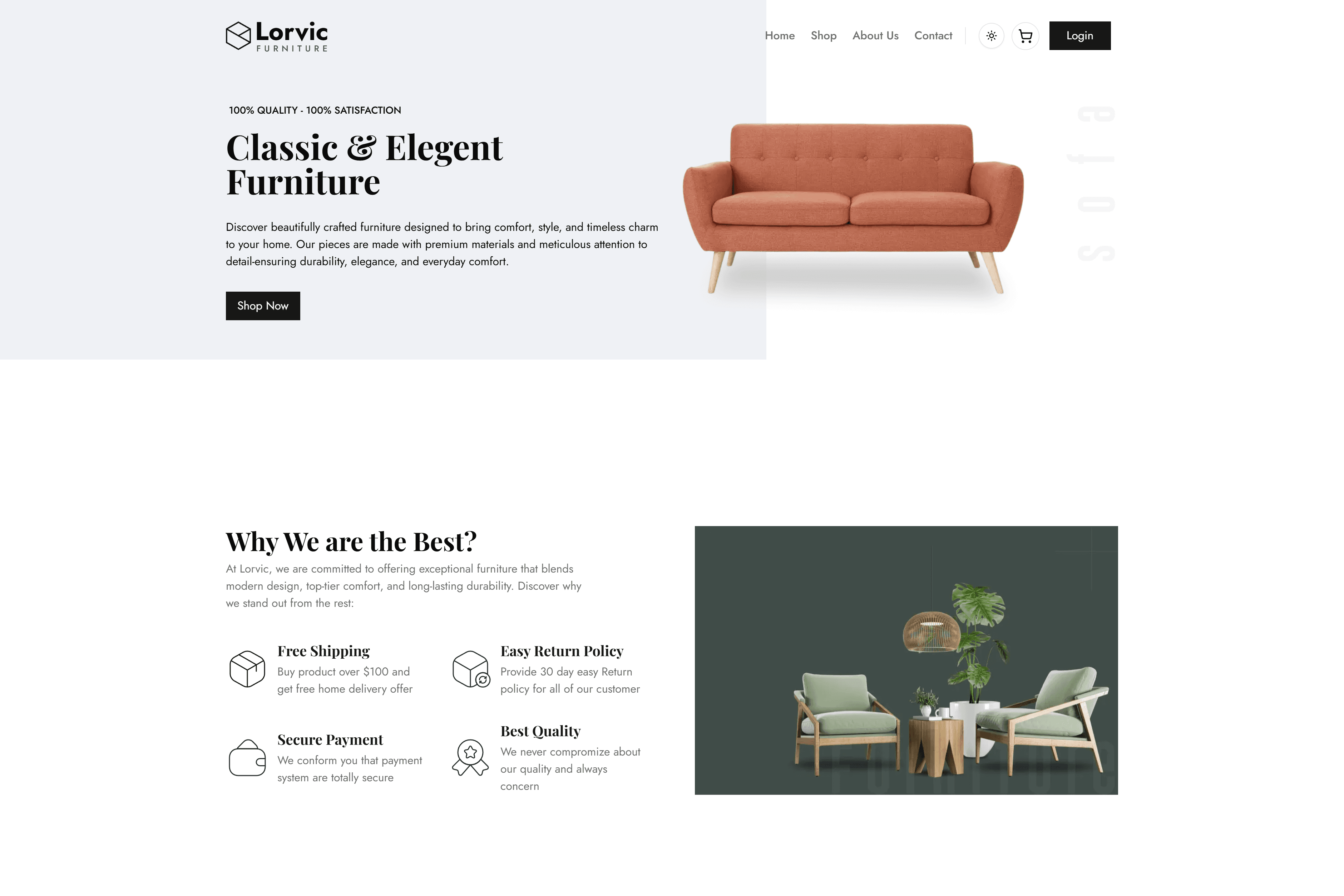
Project Scope
Client Experience
Shopping flow with role-aware dashboards
Server components and structured layouts keep browsing fast while supporting admin and vendor workflows.
- Role-based dashboards for admin, vendor, and customer.
- Product discovery with filters, categories, and galleries.
- Cart and Stripe checkout with live order feedback.
- SSR and image optimization for fast loads and SEO.
- Dark/light theme support with accessible UI primitives.
Backend Platform
Marketplace operations and secure payments
The API manages users, products, and orders with strict access control and audit-ready flows.
- JWT auth with httpOnly cookies and middleware guards.
- Vendor onboarding and inventory tracking.
- Order lifecycle management with stock updates.
- Stripe payments with webhook handling.
- Cloudinary uploads for product and profile media.
Architecture
Modular, type-safe delivery stack
Clear module boundaries keep the system scalable and easy to extend.
- Feature modules for auth, shop, vendor, admin, and customer.
- Server actions for mutations and protected flows.
- TypeScript with Zod validation across layers.
- Cloud-native deployment on Vercel.
- Security-first routing with edge protection.
Challenges
What I had to solve
- Keeping a clean hero split layout without breaking visual hierarchy on smaller screens.
- Optimizing large product imagery while preserving quality.
- Maintaining consistent spacing and rhythm across multiple content blocks.
Future Plans
Improvements and next steps
- Add full commerce flows with cart, checkout, and order tracking.
- Introduce a CMS-driven catalog for faster content updates.
- Expand product discovery with filters, search, and recommendations.